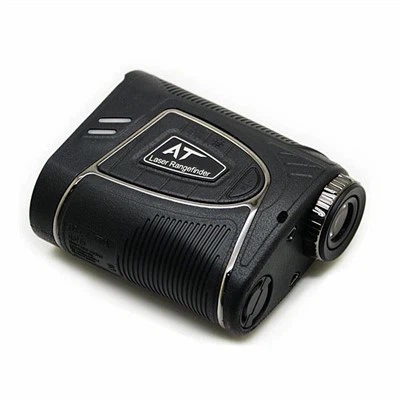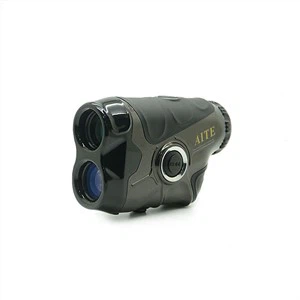
Specialized designed for golf sports. Max range: from 5-600~2000 meters range avaiable. Functions including pin seeker,scan,slope(adjust distance),jolt,M/Y unit, black LCD display, red OLED display,red+green OLED display. Extra features: magnet inside, metle body design etc. Besides, we also accept any custom features for rangefinder both SW and HW.


Why Choose Us
 

Quality products: All of our products comply with international quality standards like FDACE FCC ISO ROHS IEC60825 etc, and are highly appreciated by different markets throughout the world.


Rich experience: Established in 2002, AITE Optical set up as a manufacturer specializing in the research, development and production of laser rangefnders.


Complete models: We've developed various of Laser Rangefinder with over 30 models. Generally it's devided into 2 lens and 3 lens type of rangefinder, or LCD (black and red color display) and OLED(red or red+green color display) rangefinder.


Professional team: We have a 11 person RD team, which enable us to develop any ODM or OEM order independently, which inlcuding the Optical engineer, Structure engineer, Hardware engineer, Software engineer and Mechanical engineer.


What Is a Golf Rangefinder


A golf rangefinder is a handheld device that uses laser or GPS technology to measure the distance between you and your target. It helps you determine the exact yardage to the flag, hazards, and other important points on the course. With a rangefinder, you can get accurate measurements in seconds, allowing you to make more informed decisions about club selection and shot execution.


First 1234567 Last 1/7

Three Styles of Golf Rangefinders


In the most general sense, rangefinders utilize technology to measure the distance between you and objects on the course. Knowing these distances, you can better pick what kind of club you'll use and whether you'll hit a full shot, three-quarter shot, and so on.
Laser Rangefinders
Laser rangefinders use a visible laser beam to measure distance. Place the laser rangefinder on the ground and point it toward the object you want the distance from to find the range. The laser beam projects out and will bounce back on the reflective material that the golf course has placed on possible targets.
These types of rangefinders have become so popular they're practically commonplace. It's become a common practice for course managers to outfit pins and other targets with this reflective material.
These rangefinders are more accurate than GPS rangefinders, with an accuracy of up to 1/10 of a yard.
GPS Rangefinders
Most golf courses have submitted topographical charts of their layout so that golfers can use GPS rangefinders on them. You wouldn't be able to measure the distance between objects on a golf course by something like Google Maps, which usually renders golf courses as green spaces with no distinguishing features.
But using a GPS rangefinder, you can tap into a network of satellites to triangulate the distance between your position and any target on the course where you're playing. Some GPS rangefinders come pre-loaded with thousands of course maps, whereas others you'll need to download ahead of time from the course website before teeing off.
Optical Rangefinders
If you don't want to rely on battery power or GPS and don't trust yourself to operate a laser rangefinder (understandable), an optical rangefinder is your best bet.
Optical rangefinders are the oldest type of rangefinder, and they're analog. They look like a pair of binoculars split in half, consisting of a small tube with an eyepiece on one end and two lenses on the other. The scientific explanation involves parallax, which converts height into distance when the images created by the two lenses fuse into one.


Golf Rangefinder Features


Here are some of the features that could help you to get more out of a laser rangefinder:
Enhanced magnification: Finding reflective material close to your target will be much easier if your laser rangefinder has a powerful magnification feature.
Slope measurement: Laser rangefinders with slope measurement features calculate incline and decline angles and provide a basic distance reading and a reading adjusted for gradient. This feature must be switched on manually because it is not permitted in tournament play.
Pin locking: This laser rangefinder feature acquires the pin automatically from up to 300 yards away.
Pulse confirmation: If the laser rangefinder you choose has a pulse confirmation feature, it will vibrate gently in your hand to let you know that it has locked onto your target.
Rain and fog mode: Laser rangefinders used to be much less reliable in rain or dense fog. The latest models have technology that accounts for inclement weather to improve accuracy.


6 Tips for Using a Golf Rangefinder to Improve Your Game
 

Golf is a game of precision and accuracy, where the slightest error in distance measurement can have a significant impact on your score. To achieve better results, golfers of all levels have started using rangefinders. These devices use laser technology to accurately measure distances to various points on the course, including the flagstick, hazards, and other landmarks.
Understand your device
Before you start using your rangefinder on the course, it's essential to understand its features and functions. Most rangefinders come with different modes for measuring distances, such as slope-adjusted measurements or pin-seeking mode, which help you measure the distance to the flagstick more accurately. Golf rangefinders even come with prism lock to help you locate the flagsticks that utilize prisms for accuracy. Familiarize yourself with your device's modes and settings, and make sure you know how to use it before heading out to play.
Use it on the range
Using a rangefinder on the range can help you understand how far you hit each club and adjust your game accordingly. Measure the distance to different targets, and try hitting balls with different clubs to see how far they travel. This information can help you determine the club to use on the course and help you make better decisions about which shots to play.
By entering your average distance for each club, you'll get club recommendations based on the distance, the slope, and the atmospheric conditions. But all this technology is useless if you don't know how to use it.
Check your yardages
Once you're on the course, use your rangefinder to measure the distance to various points, including the flagstick, hazards, and other landmarks. Knowing the exact yardage to the target can help you make better decisions about which club to use, and which shot to play. It can also help you avoid hitting hazards and other trouble spots on the course.
Check for slope
Many rangefinders come with slope-adjusted measurements, which take into account the slope and elevation changes on the course. This feature can be especially useful on hilly or undulating courses, where shots may play shorter or longer than the actual distance. Use the slope-adjusted measurements to get more accurate yardage to the target and adjust your shot accordingly.
Check the weather
Weather conditions can have a significant impact on your shots, and using a rangefinder can help you adjust for wind and other factors. Use your rangefinder to measure the distance to the flagstick and other targets, and then check the wind direction and strength to determine how it will affect your shot. This information can help you choose the right club and make better decisions about which shot to play.
Stay focused
While using a rangefinder can be helpful, it's important to stay focused on your game and not get too distracted by the technology. Use your rangefinder quickly and efficiently, and then put it away to focus on your shot. Remember, golf is a game of precision and focus, and using a rangefinder is just one tool to help you achieve better results.


Things to Consider When Purchasing a Golf Laser Range Finder
高尔夫激光测距仪
高尔夫激光探测器
高尔夫测距仪 Pinseeker
带磁铁高尔夫激光测距仪

Here are a few important factors that all golfers need to consider before buying a range finder.
Magnification: Most of the range finder's currently on the market have some type of magnification. This magnification is what allows you to have some accurate yardage from several hundred yards away. Laser range finder's can be used in a number of different ways. If you are on a tee box and need to know how far it is to the water hazard it will help to know that it's 257 yards. Might be worth switching to a 3 wood off the tee.
Battery life: Along with battery life it's important to find out if the battery is rechargeable or will need to be replaced. Something that will last you for an entire season of golf is certainly going to be worth it but some will drain battery much faster than this. In general laser range finders have a pretty long battery life.
Slope/no slope: Slope can be an amazing feature to have on a range finder. This feature will take into account elevation as well as distance to give you an even more accurate reading. The problem with slope is that it is so accurate that it is generally not allowed in tournament play. If you are going to be participating in events make sure that your device has a slope function that can be disabled. Most events will require that the slope function be disabled before the start of tournament play. Although the slope feature can help quite a bit it also changes the pricing on a range finder. The slope feature generally costs quite a bit more than just a standard range finder. It's important to consider whether or not it's worth the cost for you to purchase something that has slope functions.
Price: As with all things golf-related there is a large range in pricing on range finders. A few important questions to consider are, how often you will use it and how much of an impact this will have on your game. Probably not. In that situation, it might make sense to go with the lower-cost option, without slope. If you are a scratch golfer and playing in tournaments constantly you may also want to skip the slope, it's not a feature you want to rely on if you can't use it during a tournament.
Size: There are two factors to consider with size, size of the unit and size of the display. If you walk a lot when you play you will need to consider both the weight and size of the range finder. It's not going to be worth adding several pounds to your bag if you can help it. At the same time making sure you pick something that has a large enough (and clear enough) display for you to read is also important. If you mostly play cart golf the size of the unit won't factor in quite as much. If you have any vision issues be sure you test out the range finder first to make sure you can see the numbers that are coming up on the screen.
Scan mode: The scan mode is going to help you find targets with ease. Look for a unit that has a continuous scan mode. This will help you save time on the course as well. When your range finder is helping you find the target, it makes the process much faster. Using a range finder or any type of electronic device can add some time to your round of golf if its' not used properly. Hypothetically speaking shooting, a pin should be quicker than pacing off yardages to a sprinkler head.
Durability/water proof: Make sure to read reviews on different options that you are considering. Sometimes your range finder is going to fall out of the cart or the bag, other times you will lay it on the ground next to you while you swing. Is it water-resistant? If you are making this investment sure to get something that is going to hold up over time. Some range finders are sold with a small carrying case, this is a great added benefit.
Laser vs. GPS: You should consider the GPS rangefinder if you are not concerned about exact yardages and you just want the front, middle and back. If you have a very hard time steadying your hand, a laser rangefinder could become frustrating as well. The GPS rangefinder will also give layouts of the hole should that be important to you. Generally speaking, the GPS rangefinders give much more information but the information is not as simple/accurate as the laser. The laser is the number you need to get to the pin.


How Does a Golf Rangefinder Work


Using a rangefinder doesn't take much thought. Walk or ride up to your ball, grab your laser, shoot the flag and hit.
Little do most people know how much technology is actually packed in to a rangefinder.
Makes what are called 'Laser Rangefinders.' There are a few other produced in the market, including GPS rangefinders, but that's a whole other thing. Laser rangefinders send out a laser (no kidding) to the target to calculate distance. GPS rangefinders, on the other hand, calculate distance by tracking your location. They have numerous courses pre-downloaded into their software, and then they grab a distance by determining where you are on the course and what hole you're playing.
There are a few advantages to having a laser rangefinder compared to a GPS device, but the main one being the ability to find a distance to whatever you want. Sure, a GPS rangefinder will give the numbers to the front, middle or back of the green. However, you more than likely can't find a number to a hazard with a GPS device. Or a fairway runout. Or, and most importantly, the precise distance to the hole itself with an elevation adjusted number.
Having slope adjustments when playing a round of golf is crucial. If you don't have that, you could hit a perfect shot, but come up 10 yards short. Or go 10 yards long. All because you hit the shot with the wrong number.


Advantages of Golf Rangefinders
 
01/

Accurate: Rangefinders are known for their accuracy, and they can provide precise distance measurements to specific targets on the course.

02/

Slope: Many golf rangefinders also provide distances that take slope into account. This can mean the difference between several club lengths on certain approach shots.

03/

Easy to use: Rangefinders are simple to operate and require minimal setup.

04/

Portable: Most rangefinding devices are compact and lightweight, making them easy to carry around the course.


How To Use Golf Rangefinder When There Is A Slope


When using a rangefinder on a sloped surface, you should be aware of the slope compensation feature, if your device has one. Slope compensation adjusts the distance measurement to account for the uphill or downhill slope between the golfer and the target. When conditions and rules allow, to use a rangefinder with slope compensation, simply turn on slope mode and use the rangefinder as normal. Aim the device, trigger a measurement, and look at the display to see the adjusted distance measurement, taking into account the slope between you and the target.
Some golf organizations and tournaments have restrictions on the use of rangefinders with slope compensation, so it's important to check the rules and regulations before using this feature. By using the slope compensation feature, you can get an adjusted distance measurement that takes into account the uphill or downhill slope and help you make more accurate club selections during your round.


Our Factory


Established in 2002, AITE Optical set up as a manufacturer specializing in the research, development and production of laser rangefnders, located in Beibei, Chongqing China. The production area is over 5.000 square meters, The annual producing capacity is around 150,000 pieces of laser rangefinders andbinocular. We have a 11 person RD team, which enable us to develop any ODM or OEM order independently, which inlcuding the Optical engineer, Structure engineer, Hardware engineer, Software engineer and Mechanical engineer.


productcate-1-1


Our Certificate


All of our products comply with international quality standards like FDACE FCC ISO ROHS IEC60825 etc, and are highly appreciated by different markets throughout the world.


productcate-1-1


productcate-1-1


productcate-1-1


FAQ


Q: What are the advantages of a rangefinder?

A: One of the most significant advantages of using a rangefinder is that it allows hunters to accurately measure the distance between themselves and their target. This information is crucial, as it allows hunters to adjust their aim and make more accurate shots.

Q: Does a rangefinder improve your game?

A: Using a rangefinder on the range can help you understand how far you hit each club and adjust your game accordingly. Measure the distance to different targets, and try hitting balls with different clubs to see how far they travel.

Q: How does a golf rangefinder work?

A: A golf rangefinder uses lasers or GPS technology to measure the distance from your current position to a specific target on the golf course, such as the flagstick or hazards. It then displays the accurate yardage on a screen.

Q: What is the benefit of using a rangefinder in golf?

A: Using a rangefinder improves accuracy in club selection and shot execution, speeds up play, boosts confidence, aids in course management, and helps lower scores.

Q: How does a golf rangefinder calculate slope?

A: Rangefinders are devices that use trigonometric calculations to determine the distance between the device and a target. By measuring the angle between the device and the target, along with the distance, the rangefinder can calculate the slope.

Q: Do rangefinders work on hilly courses?

A: Yes, many rangefinders offer slope-adjusting features that account for elevation changes, making them effective on hilly courses.

Q: Are GPS or laser rangefinders better?

A: GPS rangefinders provide overhead maps and hazard information but may have limitations in measuring exact pin locations. Laser rangefinders offer precise distance readings to specific targets, including the flagstick.

Q: Can rangefinders help beginners improve their golf game?

A: Yes, rangefinders help beginners by providing accurate distances, aiding in club selection, and teaching course management, contributing to better performance and enjoyment.

Q: Do rangefinders work on driving ranges for practice?

A: Yes, rangefinders are useful on driving ranges for measuring exact distances to targets. They help you practice with specific yardage goals in mind.

Q: What do you use a golf rangefinder for?

A: Golfing rangefinders come in many different shapes and styles, but fundamentally they all aim to provide the golfer with useful distance information to greens, hazards and other course features such as doglegs.

Q: Are rangefinders helpful?

A: But having a rangefinder can help you dial in your distances every time you practice. Next time you're on the range, just aim the rangefinder at the flag and start hitting a club to see where it lands in relationship to that target.

Q: Do you aim a range finder at the flag or the hole?

A: Basic rangefinders use laser technology combined with optics. To find your distance to the hole, you aim the rangefinder at the flag and click on one of the buttons on top to hone in on the target.

Q: How do I choose a golf rangefinder?

A: Before investing in a rangefinder for golfing or hunting, it's important to keep in mind the most important features: the rangefinder's max distance, its magnification, its size, and the available modes. This will help you narrow down your choices and find the right rangefinder for your application.

Q: Can you use a golf rangefinder for shooting?

A: Golf rangefinders may be used in hunting, albeit only on shorter distances while hunting rangefinders can be used in golf, but it does not focus on the immediate target objects.

Q: How accurate are golf rangefinders?

A: However, if the course you wish to play on is not included on the list of preloaded courses then your GPS band is more or less useless. Laser Rangefinders are much more accurate, most will get you the correct measurement within a yard, some even claim to be accurate to 1/2 or even 1/10 of a yard.

Q: Are all golf rangefinders the same?

A: Different models will boast 1,000-yard-plus maximum ranges, but the most important figure to consider is the maximum range at which they'll lock on to a flag or other specific golf feature. As with all electronics, you should read and compare the specs to make sure you're paying for what you want and need in a device.

Q: Why are golf rangefinders so expensive?

A: In conclusion, the high price of golf rangefinders can be attributed to the precision and accuracy they offer, the advanced technology and components they utilize, the rigorous testing and quality control measures they undergo, the niche market they cater to, and the additional features they incorporate.

Q: Do golf rangefinders work in the rain?

A: Mine sometimes works in th fog and sometimes doesn't. The same with rain. The signal from the laser has to be able to reach the target, bounce off it, and make it back to the rangefinder unimpeded. It's hardly a surprise that when something denser than air is in the way it might not work too good.

Q: Do golf rangefinders need slope?

A: With most rangefinders and GPS-based apps, you only get line-of-sight readings. And that's plenty for going through a bucket of balls at the driving range. But with a slope-equipped rangefinder, you get more accurate distance measurements, indicating which club to grab and how to swing it like a real scratch golfer.

Q: How do you clean a golf rangefinder?

A: Blow away any excessive dust or debris on exterior (or use a soft brush). To remove dirt or fingerprints, clean with the supplied microfiber cloth rubbing in a circular motion. Use of a coarse cloth or unnecessary rubbing may scratch the lens surface and eventually cause permanent damage.

As one of the leading golf rangefinder manufacturers and suppliers in China, we warmly welcome you to wholesale cheap golf rangefinder made in China here from our factory. All customized products are with high quality and low price. Also, discount information is available.

golf rangefinder for golf accuracy, Unique Design Golf Rangefinder, 800M Super Clear Golf Rangefinder

(0/10)

clearall