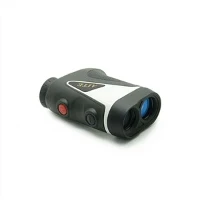
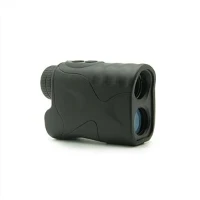
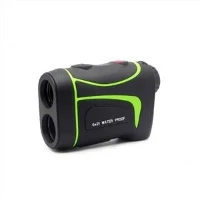
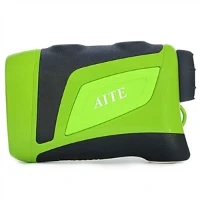
As a supplier of the 600M Slope - adjusted Golf Rangefinder, one question I'm frequently asked is: "Can the 600M Slope - adjusted Golf Rangefinder be used in cold weather?" This is a crucial query for golfers who don't let a bit of chill stop them from enjoying their favorite sport. In this blog, I'll explore the effects of cold weather on our rangefinder and offer some practical tips to ensure its optimal performance even in frosty conditions.
How Cold Weather Affects Electronic Devices
Before delving into the specifics of our golf rangefinder, it's essential to understand how cold weather generally impacts electronic devices. Batteries are perhaps the most vulnerable component. In cold temperatures, the chemical reactions inside batteries slow down, reducing their capacity and ability to deliver power. This means that a battery that might last for several rounds of golf in mild weather could drain much faster in the cold.
Another aspect to consider is the effect of cold on the display and internal components. Extreme cold can cause the liquid crystals in LCD displays to become sluggish, resulting in slower response times and potentially making the display difficult to read. Additionally, the plastic and metal parts of the device can contract in the cold, which might lead to minor misalignments or stress on the internal circuitry.
Performance of the 600M Slope - adjusted Golf Rangefinder in Cold Weather
Our 600M Slope - adjusted Golf Rangefinder is designed to withstand a wide range of environmental conditions, including cold weather. However, like all electronic devices, it does have its limits.
The rangefinder is equipped with high - quality batteries that are engineered to perform well in cooler temperatures. While the cold will still have an impact on battery life, our batteries are formulated to maintain a relatively stable output even in sub - zero conditions. That being said, it's always a good idea to carry spare batteries when playing in cold weather to avoid any unexpected power failures.
The display of our rangefinder is also designed to be resilient. We use advanced LCD technology that is less susceptible to the effects of cold. However, in extremely cold weather, you may notice a slight delay in the display refreshing or a decrease in contrast. This is normal and does not affect the accuracy of the rangefinder's measurements.
In terms of the internal components, our engineers have taken great care to ensure that the rangefinder is built to last. The materials used are selected for their ability to maintain their shape and performance in cold weather. The optical lenses are made from high - grade glass that is resistant to temperature - induced distortion, ensuring that you get clear and accurate readings even in the cold.
Tips for Using the Rangefinder in Cold Weather
- Keep the Rangefinder Warm: One of the simplest ways to ensure optimal performance is to keep the rangefinder warm when not in use. You can do this by storing it in an insulated case or even keeping it close to your body to benefit from your body heat. For example, you can place it in an inside pocket of your golf jacket.
- Pre - warm the Batteries: Before heading out onto the course, you can warm the batteries by placing them in a warm place, such as near a heater or in your car's glove box. This will give them a bit of a head start and help them perform better in the cold.
- Avoid Rapid Temperature Changes: Moving the rangefinder from a warm environment to a cold one or vice versa can cause condensation to form inside the device. To prevent this, try to let the rangefinder gradually adjust to the new temperature. For instance, if you've been in a warm clubhouse and are about to go outside, leave the rangefinder in an area near the entrance for a few minutes to acclimate.
Comparing with Other Golf Rangefinders
When it comes to cold - weather performance, our 600M Slope - adjusted Golf Rangefinder stands out from the competition. Many other rangefinders on the market are not as well - equipped to handle cold temperatures. Some may have batteries that drain quickly or displays that become unreadable in the cold.
For example, the Zoom Focus X Rangefinder is a popular option, but it may struggle in extremely cold conditions. Its battery life may be significantly reduced, and the display may not be as responsive as our rangefinder. Similarly, the Golf Distance Tracker and the Rangefinder Telescope may also face challenges in cold weather. Our rangefinder's superior design and construction make it a more reliable choice for golfers who play in cold climates.
Conclusion
In conclusion, the 600M Slope - adjusted Golf Rangefinder can indeed be used in cold weather. While cold temperatures will have some impact on its performance, our rangefinder is designed to minimize these effects and provide accurate and reliable measurements. By following the tips mentioned above, you can ensure that your rangefinder performs at its best even in the coldest of conditions.
If you're a golf course owner, a professional golfer, or just an avid golfer looking for a high - quality rangefinder that can withstand cold weather, our 600M Slope - adjusted Golf Rangefinder is the perfect choice. We are always ready to discuss your specific needs and offer the best solutions for your golfing requirements. Contact us to start the procurement negotiation process and take your golfing experience to the next level.


References
- "Handbook of Battery Technologies for Cold Environments"
- "Effects of Temperature on Electronic Displays"
- "Engineering Materials for Extreme Environments"