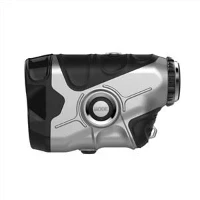
Do high accuracy golf rangefinders work in all weather conditions?
As a supplier of high accuracy golf rangefinders, I've been asked countless times whether our products can perform reliably in all weather conditions. This is a crucial question for golfers, as weather can be unpredictable on the course, and having a rangefinder that works regardless of the elements is essential for making accurate shots.


The Technology Behind High Accuracy Golf Rangefinders
Before delving into the performance of golf rangefinders in different weather conditions, it's important to understand how these devices work. Most high - accuracy golf rangefinders use laser technology. They emit a laser beam towards the target, such as a flagstick or a hazard, and measure the time it takes for the laser to bounce back. Using the speed of light, the rangefinder then calculates the distance to the target.
The accuracy of these devices is typically very high, often within a yard or even less. This is achieved through advanced optics, precise time - measuring circuits, and sophisticated algorithms that can filter out background noise and interference.
Performance in Sunny Conditions
Sunny days are ideal for using golf rangefinders. The clear skies and bright light provide excellent visibility, allowing the laser beam to travel unobstructed to the target. In such conditions, high - accuracy golf rangefinders can perform at their best. The laser is easily reflected back from the target, and the device can quickly and accurately calculate the distance.
Our Golf Laser Finders are designed with high - quality optics that can handle the bright sunlight without any issues. The anti - glare coatings on the lenses ensure that the user can clearly see the target and get an accurate reading.
Challenges in Cloudy and Hazy Conditions
Cloudy and hazy weather can pose some challenges for golf rangefinders. The moisture and particles in the air can scatter the laser beam, reducing its intensity as it travels to the target. This can lead to longer measurement times or, in some cases, inaccurate readings.
However, modern high - accuracy rangefinders are equipped with powerful lasers and advanced signal - processing algorithms. These features help to compensate for the reduced laser intensity and improve the chances of getting an accurate reading. Our Golf Distance measuring device has a high - power laser that can penetrate through the haze and clouds to reach the target. The signal - processing software then analyzes the returning laser beam to filter out any noise and provide an accurate distance measurement.
Rain and Fog: The Toughest Tests
Rain and fog are the most challenging weather conditions for golf rangefinders. Water droplets in the air can absorb and scatter the laser beam, making it difficult for the device to detect the reflection from the target. In heavy rain or thick fog, the laser may not be able to reach the target at all, or the reflection may be too weak to be accurately measured.
To address these issues, some high - end golf rangefinders are designed with weather - resistant features. They have sealed housings to prevent water from entering the device and special coatings on the lenses to repel water. Our Golf Laser Pin Finder is built to withstand light rain and fog. The water - resistant design ensures that the internal components are protected, and the device can still function to some extent in less severe wet conditions.
However, it's important to note that even the most advanced rangefinders may struggle in extremely heavy rain or thick fog. In such cases, it may be necessary to wait for the weather to improve or use alternative methods to estimate distances.
Temperature Effects
Temperature can also have an impact on the performance of golf rangefinders. Extreme cold or heat can affect the internal components of the device, such as the laser diode and the electronic circuits.
In cold temperatures, the battery life of the rangefinder may be reduced, and the performance of the laser may degrade. Some rangefinders are designed to operate in a wide temperature range, but it's still important to keep the device warm if possible. On the other hand, in hot temperatures, the device may overheat, which can also lead to inaccurate readings.
Our high - accuracy golf rangefinders are engineered to perform in a relatively wide temperature range. The internal components are designed to be stable under different temperature conditions, but users should still take precautions to avoid exposing the device to extreme temperatures for extended periods.
Windy Conditions
Windy conditions are generally less of a problem for golf rangefinders compared to other weather factors. While strong winds can make it difficult for the user to hold the device steady, the laser beam itself is not significantly affected by the wind.
However, if the wind is carrying a lot of dust or debris, it can potentially scatter the laser beam and cause interference. In such cases, it's important to clean the lenses of the rangefinder regularly to ensure accurate readings.
Conclusion
In conclusion, high - accuracy golf rangefinders can work well in a variety of weather conditions, but they do face some challenges in certain situations. Sunny days are ideal for optimal performance, while cloudy, hazy, and slightly wet conditions can be managed with the help of advanced technology. Rain, fog, extreme temperatures, and dusty winds can pose more significant challenges, but modern rangefinders are designed to withstand and perform as well as possible in these conditions.
If you're a golfer looking for a reliable high - accuracy golf rangefinder that can handle different weather scenarios, we offer a range of products that are designed with the latest technology and high - quality materials. Whether you're a professional golfer or a weekend enthusiast, our rangefinders can help you make more accurate shots on the course.
If you're interested in purchasing our high - accuracy golf rangefinders or have any questions about our products, please feel free to contact us for further details and to discuss your specific requirements. We look forward to assisting you in finding the perfect rangefinder for your golfing needs.
References
- "Golf Rangefinder Technology: How It Works" - Golf Equipment Magazine
- "Weather Effects on Electronic Devices" - Journal of Electronic Engineering
- "Advanced Signal Processing in Golf Rangefinders" - Proceedings of the International Golf Technology Conference