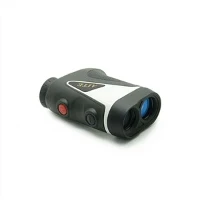
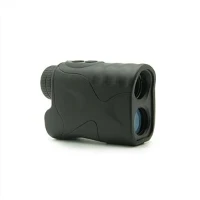
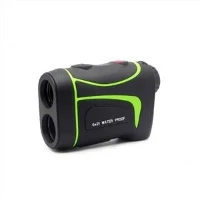
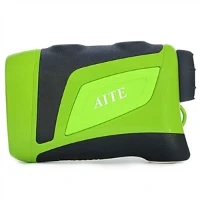
Yo! I'm a supplier of the Eye Safe Jolt Golf Rangefinder, and today I wanna talk about how this nifty device measures elevation changes. It's a game - changer on the golf course, and understanding how it works can really up your golfing game.
Understanding the Basics of Elevation Measurement in Golf
First off, why is measuring elevation changes so important in golf? Well, the slope of the ground between you and the target, like a flagstick, can have a huge impact on how far your ball will travel. A shot uphill will generally go shorter than a shot on flat ground, while a downhill shot can carry further.
The Eye Safe Jolt Golf Rangefinder comes equipped with some pretty cool technology to accurately measure these elevation changes. It uses a combination of sensors and algorithms to get the job done.
The Role of Inclinometers
One of the key components in the Eye Safe Jolt Golf Rangefinder is the inclinometer. An inclinometer is a device that measures the angle of tilt or inclination. In our rangefinder, it's constantly working to detect the angle between the device and the target.
When you point the rangefinder at the flagstick or any other target on the golf course, the inclinometer starts doing its thing. It senses the upward or downward slope of the ground. For example, if you're standing at the tee and the green is on a hill, the inclinometer will detect whether it's an uphill or downhill slope and measure the exact angle of that slope.
Let's say you're facing an uphill shot. The inclinometer will register a positive angle, indicating the elevation is rising from your position to the target. Conversely, for a downhill shot, it will show a negative angle as the elevation is decreasing.
How the Rangefinder Calculates Distance Adjustment
Once the inclinometer has measured the angle of inclination, the rangefinder then uses its internal algorithms to calculate how this elevation change will affect the distance you need to hit the ball.
It's not just a guess; it's a precise calculation based on scientific principles. The rangefinder takes into account factors like the initial velocity of a typical golf shot, the effects of gravity on the ball's trajectory, and the angle of the slope.
For instance, if the inclinometer measures a 10 - degree uphill slope and the direct horizontal distance to the target is 150 yards, the rangefinder will analyze these data points. It knows that due to the uphill slope, the ball will face more resistance from gravity on its way up, so it will suggest increasing the distance you aim for. Maybe it will tell you that you actually need to hit the ball as if the target was 160 yards away to reach the same spot on the green.
On the other hand, for a 10 - degree downhill slope at a 150 - yard horizontal distance, the ball will get a bit of a boost from gravity. So the rangefinder might recommend aiming as if the target is only 140 yards away.
The Importance of Accuracy
Accuracy is everything when it comes to measuring elevation changes on the golf course. A small error in slope measurement can lead to a big difference in the distance you choose to hit the ball.


The Eye Safe Jolt Golf Rangefinder is designed to be highly accurate. It uses advanced sensors and calibration techniques to ensure that the angle measurements are as precise as possible. This means you can trust the distance adjustments it provides, whether you're playing on a gentle slope or a steep hill.
Comparing with Manual Methods
Before the days of high - tech rangefinders, golfers used to estimate elevation changes the old - fashioned way. They'd look at the terrain, make some rough judgments based on experience, and try to guess how the slope would affect their shots.
But let's be real, this manual method was far from perfect. It was easy to misjudge the slope, especially if the ground had an irregular shape or if there were visual distractions on the course.
In contrast, the Eye Safe Jolt Golf Rangefinder gives you instant and accurate information. You just point it at the target, and within seconds, you know exactly how the elevation change will impact your shot. It takes the guesswork out of the game and allows you to focus on your swing.
Our Product Range
We offer a variety of golf rangefinders, each with its own set of features. Check out our High Precision Quick Response Golf Rangefinder. It's not only great at measuring elevation changes but also has a high - speed response, so you can get the information you need in a flash.
Another awesome option is the 1004H Dual - Color OLED Golf Rangefinder with N52 Magnetic Mount. This one has a super - clear dual - color OLED display, making it easy to read the measurements even in different lighting conditions. The magnetic mount is also a handy feature for quick and easy attachment.
And if you're looking for a rangefinder with a long - range and slope - detection capabilities, the 800Y Slope Vibration Pin Seeking Golf Rangefinder is a great choice. It can detect pins from up to 800 yards away and has a vibration feature to let you know when it's locked onto the target.
Why Choose Our Rangefinders
Our Eye Safe Jolt Golf Rangefinders are not just about measuring elevation changes. They're built with the latest technology, are user - friendly, and are designed to withstand the rigors of the golf course.
We understand that every golfer is different, so our rangefinders come with customizable settings. You can adjust the display brightness, choose different measurement units, and even set up vibration alerts according to your preferences.
Contact Us for Purchase
If you're interested in taking your golf game to the next level with our Eye Safe Jolt Golf Rangefinders, don't hesitate to reach out. Whether you're a professional golfer or a weekend warrior, our rangefinders will be a valuable addition to your equipment. Contact us for more information and to start a purchase negotiation.
References
- Golf Rangefinder Technology Handbook
- Principles of Physics in Golf Ball Trajectory
- Studies on the Impact of Elevation Changes in Golf Shots